COMMUNITY HUB
Community links, gathered.
Explore the BlockDAG community and network resources.
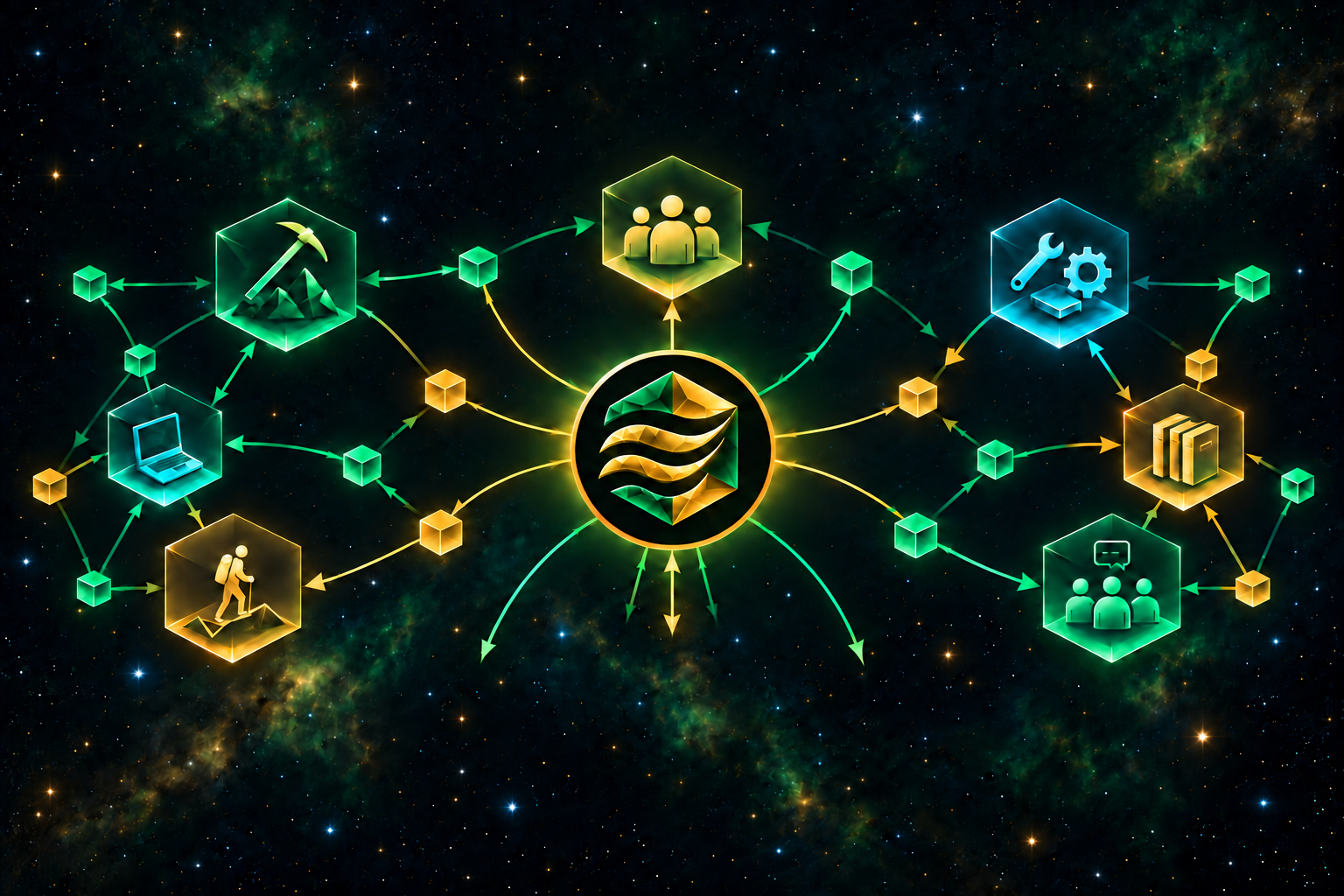
EXPLORE THE ECOSYSTEM
Community directory
Open a section to browse resources, connect with other miners, or find practical network information.
Links
- BDAG Community ↗Connect with the wider BlockDAG community.
- BDAG Explorer ↗Explore BlockDAG network data and activity.
- Odin's Network Nodes ↗View RPC nodes across the BlockDAG network.
- Psycho's Chain 1404 Evidence Pack ↗Live review compares the community Chain 1404 history with the official rpc.bdagscan.com family.
- Psycho's web365 27b blocklist check ↗Web365 27B Blocklist Check — community Chain 1404 frozen wallets behind the ~26.972B BDAG figure.
- RMS BDAG RPC ↗Live network intelligence without the noise.
- MBasestack ↗BDAG Branch Comparison
- Sin-DAG ↗Site designed for community exploration, gaming and NFT creation.
- Build on BlockDAG ↗Developer resources.
Markets
dApp
- Chain 1404 Stake Manager ↗Check staking status with pyhco's Stake-Manager
- Nodal ↗Nodal is a wallet-connected DeFi routing/bridge preview for BlockDAG chain 1404. It aims to compare liquidity sources and select the best route.
- Personal Vault ↗dApp to help with locked wallets.
- Teeth ↗The network is the weapon.
Connect With Us
Connect with the BlockDAG community. View community information ↗
- BDAG ASIC MINERS GROUP ↗telegram
- BDAG Community Group ↗telegram
- 1BDAG_COMMUNITY ↗reddit
Community AMA
These answers summarise the BDAG Community AMAs held on 18 August, 27 August, and 4 September 2026. Dates and figures are from those sessions and may have changed. Where an answer concerns a disputed claim, the source is stated clearly.
AMA transcript — 18 August 2026 ↓AMA transcript — 27 August 2026 ↓AMA transcript — 4 September 2026 ↓
How can I verify which RPC is connected to mainnet?
Short answer: Compare its block height, block hashes, transactions, and balances with several independently operated RPCs or your own node.
Read detailed answer
An RPC supplies wallets and applications with blockchain data. A network name or chain ID can be copied, so those fields alone do not prove that two RPCs serve the same ledger.
Compare recent block hashes, transaction results, wallet balances, and peer connectivity. The AMAs report that the bdagscan endpoint did not match public mainnet RPCs. Because that claim is disputed, verify the difference against independent nodes rather than relying on either side’s description.
Why does my MetaMask balance change when I switch RPCs?
Short answer: MetaMask displays the balance reported by the selected RPC. Switching RPCs changes the ledger view; it does not move your coins.
Read detailed answer
The same wallet address can show different balances when two RPCs return different transaction histories. A balance or transaction recorded on one ledger will not automatically appear on another.
Check the RPC address, latest block, transaction hash, and destination wallet when investigating a discrepancy.
Can presale, smart-wallet, or dashboard balances be moved onto mainnet?
Short answer: No. The three AMAs do not identify any verified process for moving balances held only in a separate database onto mainnet.
Read detailed answer
A purchase, vesting entry, or claim recorded only in a presale or dashboard database is not an on-chain mainnet transaction. It cannot appear on mainnet without a valid mainnet distribution.
The 4 September AMA discusses possible future community remedies, such as a pooled allocation or distributor, but no funded or approved recovery programme was confirmed.
Is BDAG a native coin or a token contract?
Short answer: BDAG is the native coin of the BlockDAG layer-one network. It does not have a token contract address.
Read detailed answer
A native coin is built into a blockchain’s protocol rather than issued through a smart contract. BDAG is used to transfer value, pay gas, reward miners, and participate in staking on the BlockDAG network.
Is a hard fork or coin migration planned?
Short answer: No hard fork or coin migration was announced in the three AMAs.
Read detailed answer
The 27 August AMA states that mainnet would continue in its existing form and that BDAG already recorded there did not require a swap or migration.
This was the position reported during those sessions. Any later protocol proposal would require current documentation and network adoption.
What BDAG supply figures were reported?
Short answer: A 25 August snapshot reported 104.7 billion BDAG issued. Of that, 27 billion was frozen, leaving 77.7 billion before subtracting any other locked allocations.
Read detailed answer
The 4 September AMA also reports that roughly 46 billion BDAG had not yet been issued and was assigned to the mining-emission schedule over approximately ninety years.
These are dated AMA figures, not a current audited supply report. Current totals should be checked against live network data.
How are block rewards split between miners and stakers?
Short answer: The 4 September AMA reports a 70% share for miners and a 30% share for stakers.
Read detailed answer
The reward was described as following a declining emission schedule, with each block’s reward divided between mining and staking.
This is the allocation reported in the AMA. Current protocol settings and actual distributions should be checked against live chain and payout data.
Can existing mainnet staking positions be unstaked and claimed?
Short answer: The AMAs say existing positions in the mainnet staking contract can be unstaked and claimed from the holder’s own wallet.
Read detailed answer
A mainnet staking position is recorded in the staking contract. Its public interface can be called directly with the holder’s wallet, so a hosted dApp is not technically required.
Verify the current chain, contract address, transaction history, and instructions before signing. A record held only on another ledger does not automatically create a mainnet position.
How can I safely help another wallet with gas?
Short answer: Send gas only to the wallet’s public address. Never request or accept its seed phrase, private key, or recovery credentials.
Read detailed answer
Confirm the recipient address and network before sending anything. The wallet owner should sign their own claim, staking, or transfer transaction.
Do not connect wallets to unverified claim sites or sign unexplained approvals. The 4 September AMA reports that spoof sites had already been used to drain wallets.
When will existing exchanges reopen deposits and withdrawals?
Short answer: No reopening date was confirmed. Each exchange controls its own deposits, withdrawals, customer records, and supported networks.
Read detailed answer
Exchanges decide which RPC and ledger they support. A venue may pause transfers while it reviews network stability or reconciles conflicting RPC data.
Do not send mainnet BDAG to an exchange until that exchange confirms that deposits are open for the same network.
Are new mainnet exchange listings confirmed?
Short answer: The 4 September AMA reports that two exchange contracts had been signed, but it does not name the venues or confirm that trading was live.
Read detailed answer
The reported integration estimate was five to ten days. That was an estimate given during the session, not a guaranteed launch date.
A listing should be treated as live only when the exchange publishes the supported network, ticker, deposit and withdrawal status, and opening date.
Is a DEX or liquidity programme confirmed?
Short answer: No specific DEX, launch date, or completed liquidity programme was confirmed.
Read detailed answer
The AMAs discuss exchange pairs, partnerships, privately funded liquidity, and community-built DEX options. These were possible routes rather than completed services.
A usable DEX still requires deployed contracts, an interface, liquidity, and public verification.
When will miner sales resume?
Short answer: No date was given. Sales were said to be paused until miners have a practical way to trade mainnet rewards.
Read detailed answer
The 27 August AMA links resumed miner sales to usable exchange listings and liquidity. The stated reason was that hardware should not be sold while buyers have no practical way to monetise mining rewards.
The AMA therefore gives a condition for restarting sales, not a fixed date.
How do miners influence the network?
Short answer: Miners influence proof-of-work consensus through their combined hash power and their choice of node software.
Read detailed answer
Publishing a protocol update does not change the network by itself. Miners must install compatible software and direct hash power to the chain that follows those rules. If miners remain divided across incompatible rules, separate chains may continue.
No single miner controls the outcome; it depends on collective miner and network adoption.
When will the DAO be operational?
Short answer: No DAO launch date was confirmed.
Read detailed answer
The AMAs propose separate governance roles for stakers and miners. Stakers would vote through locked BDAG, while miners would participate through the infrastructure and hash power they operate.
The proposal still requires governance rules, contracts, custody controls, developer work, community review, and network adoption.
What do gas fees currently fund?
Short answer: Gas fees pay for transaction processing. They do not currently fund an operating DAO treasury.
Read detailed answer
The AMAs state that no mainnet DAO treasury is currently receiving gas revenue. A future treasury would require a defined funding mechanism, transparent wallets, multisignature controls, spending authority, reporting, and community oversight.
Fees charged by an independent dApp are separate and follow that application’s own revenue model.
Do I need permission to build on BlockDAG?
Short answer: No. Anyone with mainnet access can build and deploy applications, contracts, services, RPCs, explorers, or mining pools.
Read detailed answer
Developers can connect through a public RPC or operate their own node. Because BlockDAG supports the EVM, they can use compatible smart-contract and application-development tools.
A developer can deploy independently without waiting for a central team, DAO, or website administrator to approve the project.
Is the Super App still planned?
Short answer: The 27 August AMA reports that an MVP had been built, but no public production launch date was confirmed.
Read detailed answer
The reported MVP included wallet and portfolio views, trading access, staking management, network access, and selected services. iOS and Android versions were also mentioned.
Testing, contract review, operational safeguards, community input, and production funding were still outstanding.
What is planned for the developer portal?
Short answer: A developer portal was reported as being in development, with no confirmed launch date.
Read detailed answer
Planned content includes documentation, verified RPC endpoints, explorer links, test tools, SDKs, examples, contract information, and public network-status pages.
The portal was also discussed as a place for developers to publish proposals and find community support or funding.
Has the network completed an external audit?
Short answer: No completed external audit was reported in the three AMAs.
Read detailed answer
The 27 August AMA states that external audits were not funded at that time and that vetted developers would perform internal reviews in the interim.
No external auditing firm, engagement date, completion date, or published audit report was identified.
What is the open-source release plan?
Short answer: The AMAs describe a staged release, but give no date for publishing the complete core-chain source.
Read detailed answer
Visualisation and dashboard software were expected first, followed by pool software after internal review. Core-chain source was expected later, after governance and community review were established.
These were planned stages, not confirmed releases.
What network performance was reported?
Short answer: The AMAs report roughly 4,000 transactions per second and settlement in about one to three seconds.
Read detailed answer
The reported calculation was approximately 1.2 blocks per second with about 3,500 transactions per block. Peaks above 5,000 transactions per second and up to 1.6 blocks per second were also mentioned.
The AMAs do not include benchmark methodology, test conditions, raw results, or independent verification for these figures.
Are any investors confirmed?
Short answer: No. None of the three AMAs names an investor or provides evidence of a committed investment.
Read detailed answer
The 27 August AMA states that there were no verified investor commitments at that time. The later 4 September AMA does not announce one.
A credible confirmation would require a named investor and an official announcement from the investor or project.
Does the current BDAG Community team control the original sale proceeds?
Short answer: No, according to the organisers in the 27 August AMA. They said they do not control the original sale proceeds, foundation allocations, or related wallets.
Read detailed answer
The 27 August AMA states that the current community work was being funded independently and that its organisers had no access to the historical sale proceeds.
Control of those funds is disputed. The transcripts record the organisers’ account but do not independently prove who currently controls the proceeds or related wallets.
Media Links
- BDAG Community YouTube ↗BDAG Community YouTube channel
- BDAG.life ↗Your Unofficial Source for Everything BlockDAG.
Explorer Servers
Public BlockDAG explorer servers. View community information ↗
Community Fixes
Not Getting Any Peers
Diagnosing stalled pool payouts RC65.6
Hand-building the node around RC65.6 binary
RC.02 pool: “submission conflict latch is set” or a pool that won’t start on an existing database
RC63 snapshot and peer request
Public Mining
Public BlockDAG mining pools. View mining information ↗
- BDAG Explorer ↗
stratum+tcp://pool.bdagexplorer.com:3334 - BDAG-US East ↗
stratum+tcp://east.bdag-us.org:3334 - BDAG-US West ↗
stratum+tcp://west.bdag-us.org:3334 - CapeDAG ↗
stratum+tcp://pool.capedag.com:3334 - CMS-MINING-POOL ↗
stratum+tcp://stratum.cms-mining-pool.net:33457 - DagCore ↗
stratum+tcp://stratum.dagcore.net:3334 - DVD Mining ↗
stratum+tcp://pool.dvdmining.com:3334 - RMS BDAG RPC ↗
stratum+tcp://rms-bdag-rpc.de:3334
Requests
coinbase-stuck-transaction-report
RPC Servers
Public BlockDAG RPC endpoints. View chain information ↗
rpc.bdagexplorer.comChecking…rpc.bdagscan.comChecking…rpc.blockdag.engineeringChecking…rpc.blockdag.solutionsChecking…rpc.brazil.bdag-us.orgChecking…rpc.capedag.comChecking…rpc.community.bdag-us.orgChecking…— RPC PROXYrpc.cms-mining-pool.netChecking…rpc.dagcore.netChecking…rpc.dvdmining.comChecking…rpc.east.bdag-us.orgChecking…rpc.england.bdag-us.orgChecking…rpc.escrowhubs.ioChecking…— Archive Noderpc.macula.co.zaChecking…rpc.west.bdag-us.orgChecking…
FAQs
BDAGScan ASIC miners
Question:
When will I be receiving my BDAGscan ASIC miner
Unfortunately, it appears that BDAGscan may have scammed a few thousand people. Of the few thousand units that were reportedly ordered, only around 20 were actually manufactured. Production was eventually halted when BDAGscan stopped making payments.
My understanding is that Nic managed to get a small number of units delivered before he was evicted from the Dubai offices. The units supplied through Jeremy were sourced and prepaid by Jeremy himself, because BDAGscan still owed the supplier money and they are no longer willing to supply additional units on credit.
I hope this helps clarify the situation.
BDAGScan unstaking
Question:
What happens to tokens that were originally staked through BDAGScan and later unstaked, if those tokens and unstaking transactions are not visible in the current authoritative explorer? How can their status and ownership be verified, and where should they ultimately appear once the unstaking process is complete?
Tokens originally staked through BDAGScan remain governed by the staking contract on that isolated branch. If the tokens and unstaking transactions are not visible in the current authoritative explorer, their status and ownership must be verified directly on the BDAGScan branch using the original wallet address, transaction hashes, and staking-contract records.
Once the unstaking process is complete, the tokens should be released back to the original wallet on the BDAGScan branch. They will not automatically appear in the authoritative engineering explorer unless the tokens are subsequently transferred or migrated to that chain.
Current branch staking
Question:
Is staking fully working on the current branch?
Answer:
Pending
Node and PC mining requirements
Question:
Hi everyone. I am sure this info is somewhere in here (if I search for it), but what are the PC requirements to run a node and/or PC mine?
Recommended specs
Processor
Intel i3 or i5, or equivalent
Memory
16 GB DDR3 or better
Storage
256 GB SSD or NVMe
A spinning disk cannot keep pace with the chain, so a node on one never finishes syncing.